

Tory Burch Outlet Hunting: Telling the Authentic From the Counterfeit
Few queries in luxury retail attract as much clutter as the outlet one, and almost none of it originates with the company. The search string tory burch outlet covers two different things: a verifiable set of shops inside premium outlet centres, and a rotating population of websites that appropriate the name. Telling apart the two is not a matter of instinct, because the brand has put out a plain statement that answers most of the question. This piece takes the claims that circulate most often, states each as the myth it is, and places the verified position beside it. Prices mentioned here are observed market figures from September 2026, not an official price list. The habit worth building is to stop asking whether a discount seems attractive and begin asking which channel is offering it.
Myth: somewhere there is an official outlet site to buy from
There is not, and this is the load-bearing fact of the whole subject. In its own counterfeit guidance the brand says outright that it does not have an online outlet website. The same guidance also names the places authentic product is sold: brand stores and brand outlet stores, the brand’s own website, and a selected group of authorised department and specialty retailers. Put the two statements side by side and the conclusion becomes impossible to avoid: a storefront styled as the official online outlet is, by definition, misrepresenting itself. None of this is a judgement about any particular operator, and it does not toryclothing.com turn on how convincing that operator looks. It is a structural fact about the channel, and it explains why outlet shoppers come unstuck: attention goes to the offer rather than the seller.
Fact: those physical outlet stores really do exist
Actual outlet stores have been in place for years, concentrated in premium outlet centres. Among the locations on published listings are Woodbury Common in Central Valley, New York, plus Las Vegas North, Tulalip in Washington, Cypress in Texas, Halton Hills in Ontario, and centres at Cabazon, Camarillo, Carlsbad, Livermore, Phoenix, San Marcos and Tulsa. There is an official store locator, operated by the company and carrying dedicated pages for outlet locations; it is the only verification tool a shopper needs. No official outlet-store count could be confirmed, so treat any specific number as unsourced. The wider estimate on company boilerplate is around 400 stores worldwide, repeated unchanged for several years and best quoted with that caveat. If you can walk into it and it appears on the locator, it is real.
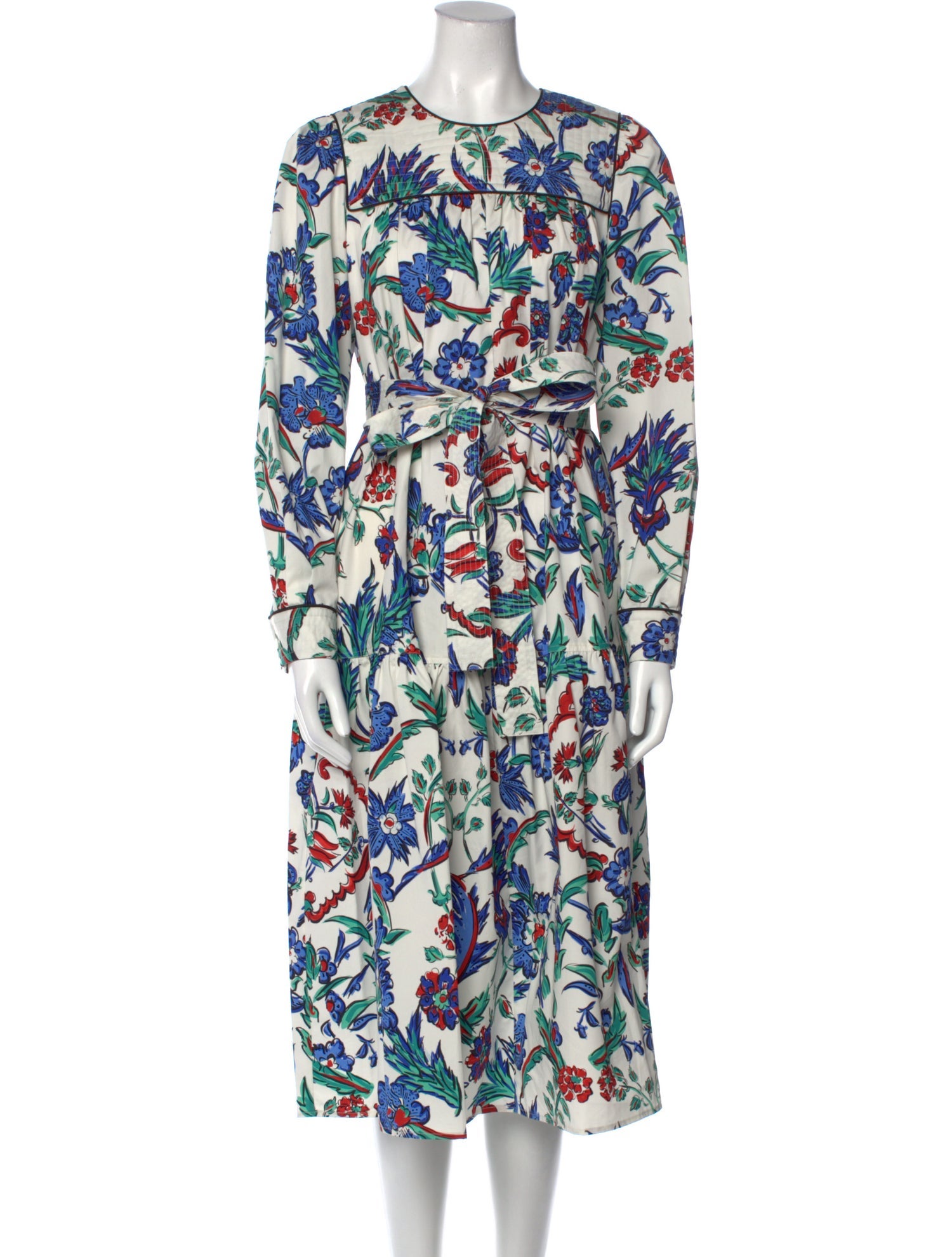
Myth: a slick website must be a real one
Without hedging, the brand warns that a web address containing its name proves nothing, and that search visibility, slick branding, official-status claims and cut prices are worth no more. The construction pattern is easy to describe without naming anything: the brand name bolted to an authority word such as outlet, factory, clearance, official or sale, frequently hyphenated and sitting on an unusual address suffix. Registration on those addresses is typically recent and shielded by privacy services, so a single operation can reappear under a new name within weeks. Imagery proves nothing either, because operators take the brand’s own campaign photography wholesale and clone the real layout closely. The catalogue gives them away instead: a single percentage applied to every item, sizes that never sell out, machine-translated names, and styles from seasons that were never sold together. So do the trust pages, which often carry no verifiable address, a free-mail contact, a phone line nobody answers and a stale copyright year.
Myth: Saks OFF 5TH is still the simple way to buy at a discount online
Of all the advice in the discount literature for this brand, this is the most outdated. Saks Global filed for bankruptcy in early 2026 and walked away from the off-price business, and the Saks OFF 5TH e-commerce operation shut down entirely. Around a dozen physical locations survive and no more, operating as clearance outlets for full-line inventory rather than as a national chain. Nearly every older article on finding this brand cheaply still points readers to that site online, and the advice now leads nowhere. Anyone with a habit built around it should replace the habit rather than assume the site is temporarily down. This deserves saying bluntly, because a shopper hunting a defunct retailer is the one most likely to land on an imitation storefront instead.
Fact: legitimate off-price routes are still open
The loss of one off-price retailer does not empty the category. The brand is carried by Nordstrom Rack, which has been expanding, with roughly twenty-three new stores reported for 2026. It is also sold by TJ Maxx and Marshalls, both part of TJX, which has reported plans for around 146 net new stores across 2026. Nordstrom full-line sale and clearance events include the brand as well, which is a different mechanism arriving at a similar outcome. Beyond discount channels, authorised current-season stockists include Bloomingdale’s, Saks Fifth Avenue, Shopbop, Zappos, Farfetch and SSENSE, and warehouse clubs have listed styles such as the Ines slide. No promise of a particular discount at a particular time comes with any of them, and off-price assortment is unpredictable by design.
Myth: a “made in China” label means the item is not genuine
This is the most common false authentication test applied to the brand, and it fails immediately. China, Italy and Portugal are all reported as genuine production origins, and other countries appear in the market too. Country of origin therefore authenticates nothing here, and rejecting a real item on that basis simply loses money on a returns cycle. The related myths are equally weak, because dust bags are counterfeited and sold separately, and the same holds for boxes and paper hangtags. On serial numbers the guidance contradicts itself, with some consignment authenticators saying these bags carry none and others describing an interior style and production code. Neither position is settled, all of it comes from commercially interested parties, and no official authentication service run by the brand could be identified.
The signals, side by side
Holding both patterns in view works better than testing one attribute at a time. In the table below, the middle column shows how a legitimate channel behaves and the right-hand column shows the imitation pattern. A single row proves nothing on its own, since a competent operator will clear several rows. It is the combination that matters, and the payment row comes closest to being decisive. Everything here describes patterns rather than any specific business, because the addresses involved rotate constantly. Treat it as a checklist to run before you enter payment details, not after.
| Signals | Legitimate channel | The pattern of imitation |
|---|---|---|
| Channel type | A brand store, brand outlet, the brand site, or an authorised retailer | Describes itself as the official online outlet |
| How deep the discount goes | Varies by item and season | Flat 80 to 90 per cent site-wide |
| Stock behaviour | Sizes and colours run out | Everything always available |
| How products are named | Consistent and up to date | Full of misspellings or machine translation |
| Contact information | A verifiable address and a working phone | Free-mail address, phone line nobody answers |
| Payment method asked for | Standard card or wallet checkout | Wire, crypto, gift card or bank transfer |
| Arrival route | Organic search, the locator, or a familiar retailer | Paid social, or a shopping advertisement |
How the pitch reaches you, and what to do if you paid
The warning most articles omit concerns traffic source rather than site design. The majority of people who lose money to an imitation storefront come in through a paid social or shopping advertisement, not through organic search. It matters because an advertisement sidesteps every habit you have built around recognising a familiar retailer, dropping you at a checkout in two taps. The creative leans on urgency, a countdown, a liquidation claim or a discount steep enough to override scepticism, and the outcome is consistent: either nothing ships despite a convincing order confirmation, or a low-grade counterfeit arrives from overseas. In both cases the card details and personal data are the real product being harvested. If payment has already gone through, raise a chargeback with your card issuer immediately, change any password reused at that checkout, and keep the confirmation and the advertisement as evidence. Reports of suspected counterfeit operations can go to the brand’s enforcement contact and to national intellectual property enforcement bodies, although recovery is unlikely where payment went by wire, crypto, gift card or bank transfer.
The single rule worth keeping
Reduce all of the above to a sentence and you get something you can apply in seconds. If a website calls itself an online outlet for this brand, it is not this brand, because the company states it does not operate one. Everything else falls out of that: a physical outlet store gets verified against the official store locator, an off-price bargain gets verified by shopping a retailer that exists in the physical world, and a discount is never evidence of anything. It is worth learning the correct spelling of the name too, given that misspellings feed directly into imitation-address construction. Remember too that the real business is neither liquidating nor cutting eighty per cent across a whole catalogue, which means the pitch refutes itself. Apply the channel rule consistently and this whole category becomes boring, which is the correct outcome.